1. Infants and Toddler intervention unit
  2. Early Childhood Special Education unit for Intellectual Disabilities (ID), Cerebral Palsy (CP) & Multiple Disabilities (MD).
  3. Vidya Sudha Intensive Multi-disciplinary Programme (VIMP)
  4. Pre-academic  (Pre-primary) programme
  5. Family support services for Out-Station (OS) children and parents
  6. Remedial training and School follow-up programmes
  7. Parent training

Infants and Toddler intervention unit (age group: below 3 years)

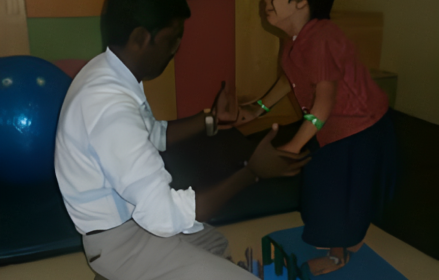
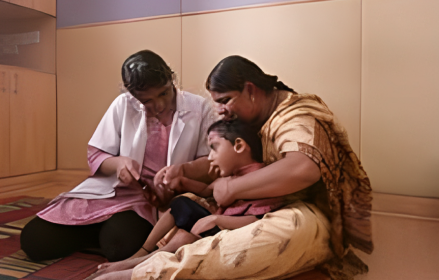
  • This programme has been designed exclusively for Children with Global Developmental Delay (GDD) and Toddlers.  It operates in collaboration with the Karthikeyan Child Development Unit (KCDU) and Faculty of Physiotherapy. The objective is to provide structured services to infants with developmental delays under the age of three. The programme supports and assists parents in maximising their child’s development through play-based activities.
image
    • A multidisciplinary team, including Special educators, Physiotherapist, Occupational therapist, Speech therapists, Optometrist, and adjunct medical professionals like Developmental Paediatricians, Neuro-Paediatricians, Pedodontics render their support for half-day activities. Individual stimulation (one on one session) exercises such as physiotherapy, speech stimulation, pre- linguistic training, early stimulation, visual stimulation, diet counselling are given to each child. UPANAYAN –Phase I checklist is used as a curriculum.

Early Childhood Special Education unit (age group: between 3 years and 6 years)

  • The centre caters to children aged between three and six years with Intellectual Disabilities (ID), Cerebral Palsy (CP) & Multiple Disabilities (MD). Admissions are provided based on the disabilities to ensure tailored interventions. Each classroom has been structured to maintain a low student-teacher ratio (1:8 ratio), facilitating personalized attention. Comprehensive evaluations are conducted employing standardized and informal tests by a multi-disciplinary team. All programmes are individualized and based on the unique strengths, abilities and needs of each child.


image
  • Children receive individual and group therapy sessions. The UPANAYAN-Phase II checklist is used as a curriculum with a special educator team involved in its implementation. Core services included early intervention, speech therapy, cognitive development, language development, socialization, feeding & Oro motor stimulations, ADL training, Intensive Physiotherapy, and functional academics.

Vidya Sudha Intensive Multi-disciplinary Programme (VIMP) unit (age group : above 3 years  to 5 years)

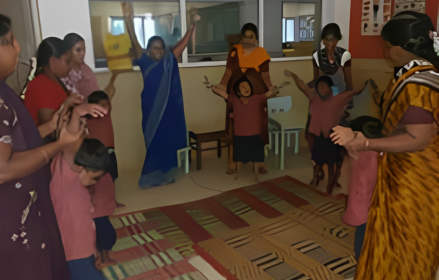
  • This unit was exclusively started for the welfare of Children with Pervasive Developmental Disorders, particularly those with Autism Spectrum Disorder (ASD), Attention Deficit Hyperactive Disorder (ADHD), Fragile X Syndrome, and Children with Communication disorders. Children aged between 3 and 5 years are enrolled in this programme. The Comdeall (Communication De All, Bangalore) checklist serves as the educational curriculum for this unit.
image
  •  A multidisciplinary team, including a Special educator, Occupational therapist, and Speech pathologist works full-time along with parents. This team focuses on specific attention to areas such as cognition, communication, socialization, life skills, motor & fine-motor skills, hand function, sensory integration, and behavioural aspects.

Pre-Academic (Pre-primary) programme (age group- between 3 years and 8 years)

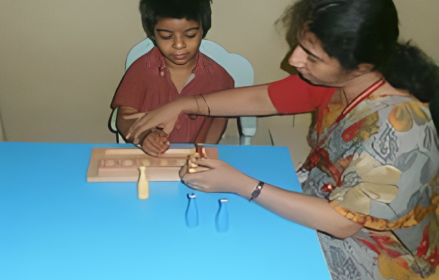
  • This interventional programme is designed for children with High Function Autism Spectrum Disorder (ASD), those with Specific Learning Difficulties, and with High and Moderate Cognitive Impairments. Children aged between 3 and 8 years are eligible candidates for this programme. The educational curriculum incorporates Montessori education and Kindergarten training (Play-way school coaching). 
image
  • Besides, a multidisciplinary team comprising a Montessori Teacher, a Special Educator, an Occupational Therapist, a Speech Pathologist, and a Clinical Nutritionist collaborates with parents on need-based interventions. This team focuses on key areas such as communication, socialization, life skills, hand function, sensory integration, regular academics (Nursery education), Handwriting training, and school readiness skills.

Family support services for Out-Station (OS) children and parents (age group between 3 years and 8 years)

  • This intervention is particularly designed for Outstation children and their parents. Children and Parents residing outside Chennai, particularly in other parts of Tamil Nadu, and those from other regions of India and abroad can access a range of rehabilitation services such as early intervention, pre-academic coaching, and remedial training on available days or alternative days. Parental training and home management programmes are the major focus areas of this programme.
image
  • Accommodation and in-house training are arranged for both children and escort, either within the SRIHER campus or in the surrounding areas. Training durations range from a minimum of one week to a maximum of three months for outstation children and parents.

Remedial training and School follow-up programmes (age group between 5 years and 15 years)

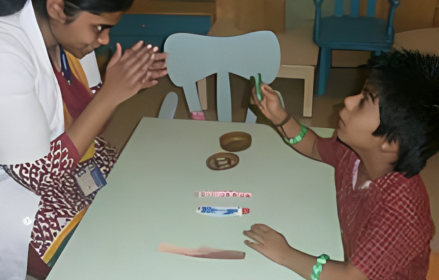
  • Children who have finished their early intervention programme in Vidya Sudha or who have sufficient cognition and learning ability as manifested by readiness to write, read, do arithmetic and ADL skills are integrated into mainstream schools. These children are admitted to Vidya Sudha to start remedial and school follow-up programmes. These are specialized and structured programmes for school-going children with special needs, who for whatever reason, require remedial educational assistance, school follow-up and special attention to enable them to excel in academic pursuit.
image
  • Tamil and English media are used for instruction and students with disability prepare themselves for the State Board and Central Boards examinations, including AI, CBSE & IGCSE. It is a bi-weekly programme where parents are trained by the multidisciplinary team. For this programme, preference is given to VS alumni as well as regular school-going children especially those with intellectual and developmental disabilities and specific learning disabilities to education up to the age of 15 years.